From Chatbots To Travel Companions: How Tourism Providers Get AI To Recommend Them
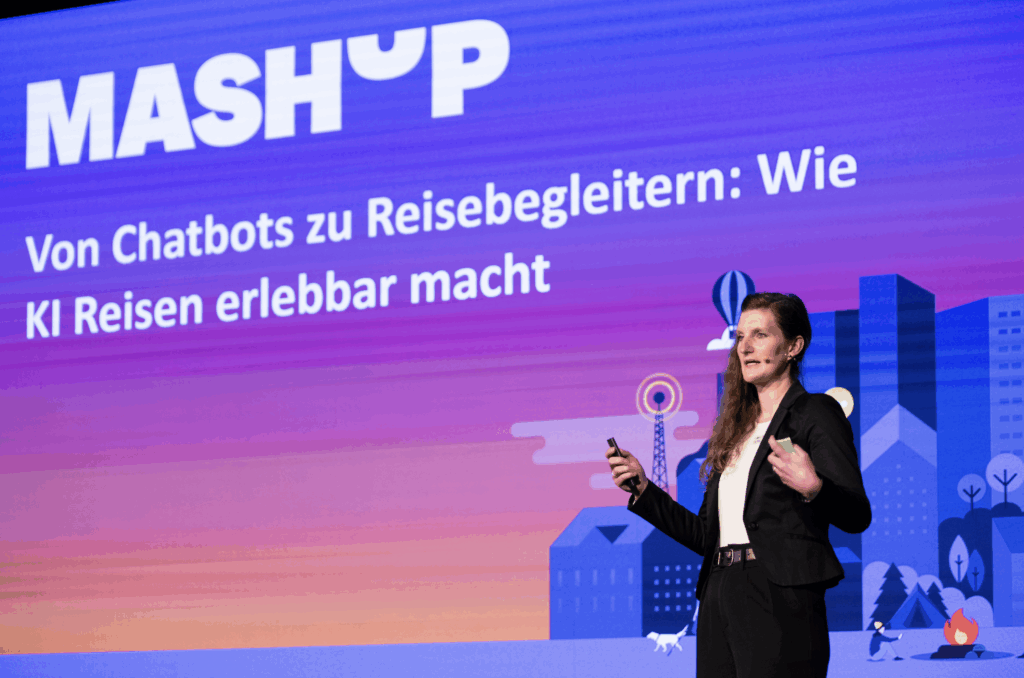
Around 270 tourism professionals, a room full of curious faces, and a topic that still makes many people feel a little queasy: artificial intelligence. At the Schleswig-Holstein Tourism Day 2025, I was invited to give the knowledge-hungry representatives of the region an insight into the world of AI and to show why, even in tourism, it is not just a cold tech trend, but an invitation to adventure.
Of course, I paid particular attention to the opportunities presented by these rapid developments, how providers can benefit from the new circumstances, and how AI can help them tap into new target groups. After all, experiences will still need to be experienced in real life in the future. But to do that, guests first need to find their way to the right one. And the first stop on their customer journey is increasingly often a chat with AI. Let’s dive in…
AI And Tourism: Not An Opponent, But A Game Changer
Sure, AI initially sounds like Silicon Valley, algorithms, and robots that want to challenge our humanity. But in reality, it represents a huge opportunity, especially for those who are fighting for visibility when the passion is huge but the budgets are small. And in the highly competitive tourism sector, there are of course many such brands. So it’s no wonder that AI and tourism are a much better fit than you might initially think when considering tangible experiences. And so, when I asked my starting question about the use of AI in the room, the vast majority of hands shot up without hesitation.
The industry is intensively engaged with this topic, and rightly so. Because one thing is certain: the AI market is growing rapidly. From US$3.4 million in 2024, it is expected to grow to almost
How Are Tourism Providers Using AI Today?
Many tourism professionals have long been immersed in the AI adventure. Writing texts, creating materials, responding to booking inquiries—AI can support all of these tasks. Here is an overview of things that have long since become part of everyday life:
- In marketing, it helps with writing offer descriptions, social media posts, SEO texts, and newsletters, or creates images and graphics where real ones are missing. This saves time, brings fresh ideas, and makes it easier for small teams to remain visible.
- In guest communications, chatbots take over night duty and respond in multiple languages, while automatic translations or personalized recommendations ensure more bookings.
- When it comes to pricing, AI dynamically calculates who is willing to pay what price and when, ensuring fair but profitable models.
Digression: AI Influencers – Between Perfection And (Lack Of?) Personality
An extreme example of AI content support are the so-called AI influencers: virtual people who never get tired, never sweat, and never have a bad day. For brands, this sounds tempting at first: 100 percent control, no shitstorms, no salary negotiations.
The best example from the industry: EmmaTravelsGermany, who “travels” throughout Germany on behalf of the German Tourism Board, producing inspiring content without ever requiring a real person to be on site.
/
But this is precisely the crux of the matter in the tourism industry: travel thrives on emotions, encounters, and real stories. AI can help tell these stories, but it cannot replace them. Virtual models can show beaches, but only real people can feel the sand between their toes and convey that excitement.
For tourism brands, this means: let AI be the toolbox, not the (solo) travelers. A good mix of increased efficiency through artificial intelligence and real stories from visitors pays off in marketing.
Where Travelers Are Already Using AI Today — And What That Means For Providers
A lot has happened on the user side as well. Around 40 percent of travelers worldwide already use AI-based tools for planning, whether it’s ChatGPT, Google Maps, or booking platforms with smart recommendations. In Germany, skepticism is still noticeable, but at least 70 percent of those surveyed are open to the topic.
“Anyone who has ever asked ChatGPT for directions, a restaurant recommendation, or a daily itinerary for a weekend trip will quickly realize that it doesn’t feel like a machine, but rather like a digital travel coordinator.”
Julia Beyer, Brand Storytelling Expert at Mashup Communications
For providers, this means that when travelers make their plans using AI, they need to be included in the AI’s plans!
From SEO To GEO – How Small Providers Can Make It Big
The magic formula is: GEO (Generative Engine Optimization).
Fewer and fewer people are turning to search engines like Google when planning their leisure time. Instead, they are increasingly turning to ChatGPT, Gemini, and other AI tools. The tried-and-tested SEO mechanisms for improving one’s search engine ranking are no longer as effective. What may initially sound like a disaster for marketers can actually be a huge opportunity, especially for providers with smaller budgets. That’s because artificial intelligence no longer thinks only in terms of keywords (in which you sometimes had to invest large sums of money), but in terms of experiences, places, and stories.
And winning the favor of artificial intelligence is no rocket science. Five tips for GEO in tourism:
- Maintaining the digital foundation
ChatGPT and similar platforms appreciate clean data, so providers should create a complete Google Business Profile (Maps) and update it regularly. Consistent NAP data (name, address, phone number) should be included on all platforms (Google, TripAdvisor, Booking, GetYourGuide, Komoot, etc.).
- Platforms as feeding grounds for AI
In order for tools such as ChatGPT or Google Gemini to recommend you, you need to be visible where they get their data from – on platforms such as Google Maps, TripAdvisor, GetYourGuide, Viator, Outdooractive, Komoot, Yelp, Booking, or Airbnb Experiences.
- Making websites machine-readable
When searching for good recommendations, the AI naturally also checks the providers’ websites. To ensure that it understands what it is reading, the texts should be designed in such a way that it is immediately clear why the offer is perfect for the request. Clear descriptions with keywords that travelers are actually searching for (“kayak tour on the Spree” instead of “unique experience”) and FAQ sections (“How long does the tour last?”, “When is the season?”) are particularly helpful in this regard.
- Storytelling instead of deadwood
AI wants to please. It therefore wants to avoid providers who turn out to be closed or unsatisfactory after the recommendation. Experience creators must therefore credibly demonstrate to AI that they are passionate about their work and offer memorable activities. And what easier way to do this than by regularly posting new content in authentic language, including descriptions of what guests experience, not just what is on offer? In short, real stories are the hot currency for AI.
- Recommendations strike right at the heart of AI
Anyone can praise themselves. However, what AI finds much more exciting, because it is simply more credible, are the experiences of others. Providers should therefore actively ask their guests for reviews. And psssst, in addition to happy customers, local media are also among AI’s absolute favorite whisperers. A good PR strategy therefore not only supports your brand, but also your AI discoverability.
“In short: AI is your new multiplier. It helps people discover your passion, your location, and your experience — even without a large advertising budget.”
Julia Beyer, Brand Storytelling Expert at Mashup Communications
Want more GEO tips? Then take a look at this blog post I wrote.
Conclusion: Don’t Just Write Stories, Tell Them Too
AI can do a lot, but it will never give you the same goosebumps as your first glimpse of the ocean, the culinary delights of a new place, or the adrenaline rush of bungee jumping. And it can’t replace hosts and guests who talk about their experiences with sparkling eyes.
But what it can do is make these stories visible.
And that is precisely the opportunity, especially for small, authentic providers who want to embark on an adventure.
My conclusion after Tourism Day:
AI is not the enemy. It is a compass in a new world of travel. Providers just need to dare to take the first step.
🧭 TL;DR – AI In Tourism At A Glance
- 💡 AI is not a threat, but a tool: Small providers in particular benefit from new opportunities in content, marketing, and guest communication.
- ✍️ Automated support: AI assists with texts, translations, pricing, and booking requests, saving time and resources.
- 🤖 AI influencers are exciting, but they are no substitute for real guests: authenticity and genuine stories remain the most important factors for success.
- 🌍 Travelers already using AI: tools such as ChatGPT and booking platforms rely on personalized recommendations.
- 📍 Evolving from SEO to GEO: Visibility is created through locations, experiences, and fresh content—on Google Maps, TripAdvisor, and other platforms.
- 🚀 Conclusion: AI makes visible what people create with passion. Those who tell stories will also be found in the new world of travel.

Julia Beyer ist Head of Onboarding & Culture sowie Brand-Storytelling-Expertin bei Mashup Communications mit über 15 Jahren Erfahrung in der Kommunikationsbranche. In ihrer langjährigen Beratertätigkeit hat sie Unternehmen aus B2C und B2B in alle Ecken der deutschsprachigen Medienlandschaft gebracht. Als Teil des Workshop-Teams leitet sie zudem Vorträge sowie unternehmensinterne Workshops, in denen sie Insights und Inspirationen rund um Markengeschichten und Employer Branding auch auf Konferenzen, Panels und Branchentreffen teilt.
Share this article
Related articles




10 March 2026
Data Storytelling 2.0: How AI Creates Perspectives – And Demands Responsibility
Read More