
Black Friday 2026: How Much of the Brand Will Remain?
“20 percent off. Just for you. Today only.”
As early as the beginning of November – weeks before Black Friday – an email from your favorite brand sounds just like one from an online store where you ordered a small item years ago. Amid all the special offers and countdowns, it’s often only the sender’s name that reveals who’s currently vying for your attention.
That’s exactly what bothers me about the annual discount war. Brands spend months developing their own unique voice and setting themselves apart from the competition, only to then compete for the same customers with nearly identical offers. I have nothing against good deals. My problem starts when the discount is the only story a brand has left to tell.
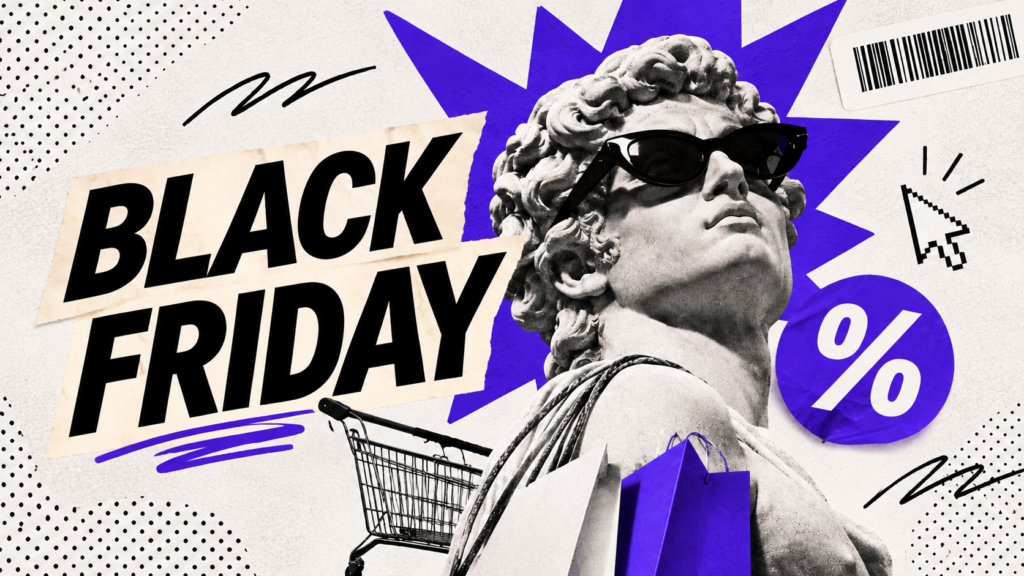
British marketing researcher Les Binet recently drew a striking comparison. At the IPA’s Effectiveness Conference in October 2026, he compared price promotions to hard drugs, noting that they are expensive and dangerous, and that it’s hard to break the habit. The sales rush begins immediately but fades quickly, which is why the next deal has to come along soon. I can well understand why companies participate anyway. According to the latest Retail Media Insights Barometer from OTTO Advertising, two-thirds of German online shoppers surveyed would buy from an unknown brand on Black Friday – provided the offer is right.
So, with a good price, it’s easy to make a new acquaintance. It gets more difficult, however, if you want that to turn into a long-term relationship.
The First Black Friday Purchase Is Easy. The Second One Isn’t.
An analysis by the marketing service provider Ometria shows just how rarely a one-time bargain purchase leads to repeat business. Of the people who placed their first order at one of the online stores surveyed during the 2024 Black Friday period, only 4 percent made a second purchase in the following twelve months. Three-quarters of them did not place another order until the next Black Friday period.
That doesn’t surprise me much. When people discover a store mainly because of a discount, the first thing they remember is the low price. The brand then has to show them why they should order from there again when there isn’t a sale going on.
To do that, it needs something that stays interesting longer than just the day of the sale. A cell phone provider has demonstrated how this can work in a pretty entertaining way.
Rica’s Lousy Deals: How Fraenk Turned the Discount War into a Talk Show
My favorite Black Friday campaign, of all things, comes from the mobile phone industry. While providers usually outdo each other with special plans in November, fraenk – Telekom’s app brand – chose to focus on entertainment in 2024.
Starting November 11, the talk show “Klartext mit fraenk – Deal oder Desaster?” aired on TikTok, YouTube, and Meta; it looked as if someone had dug up an afternoon show from the 2000s. In the show, host itsbabyshelly spoke with comedy creators like ricas.realtalk and jucki.ha about family dramas and embarrassing shopping mistakes. The very first episode focused on Rica’s lousy Black Friday deals.
The idea from the agency charles&charlotte: to poke fun at all the discount hype instead of competing for attention with yet another special offer. This aligned with fraenk’s positioning, because a company that offers low rates all year round doesn’t need to create an artificial sense of urgency in November. (fraenk press release)
In 2025, the campaign won a Bronze Effie. What impresses me even more than the award, however, is that you can recount the talk show without mentioning a single percentage. With many traditional Black Friday ads, if you took away the discount, there would be little more left than a product photo and a “Buy” button.
Get Involved Without Compromising Yourself
Companies participating in Black Friday don’t have to compromise their brand identity. The wild herb brand kruut, for example, is committed to sustainability but still took part in the discount frenzy in 2025. Selected products were marked down by up to 35 percent.
Even before the sale began, the company explained its reasoning in its own magazine. The products were intended to be affordable even for people on a tighter budget, while the additional demand could support wild herb cultivation at partner farms. To avoid creating artificial time pressure, newsletter subscribers were allowed to shop at their leisure starting November 5.
Whether a discount promotion actually promotes sustainable consumption is up for debate. But I like that kruut openly addresses this contradiction instead of hiding it behind a red “Sale” banner.
Patagonia began questioning the culture of consumerism much earlier. In 2011, on Black Friday, the outdoor brand ran a full-page ad in The New York Times with the headline “Don’t Buy This Jacket.” That campaign has long been part of Patagonia’s brand history. What I find even more interesting, however, is how this stance is now reflected in the company’s business model.
Through its Worn Wear secondhand program, Patagonia sold just under 160,000 used items in fiscal year 2026. Since October 14, customers have also been able to order new and used clothing together in the U.S. online store. This means secondhand items are available right alongside new products, without having to visit a separate store. (Patagonia)
Fifteen years have passed between the ad and the shared shopping cart. No discount code lasts that long.
After Black Friday, the Real Work Begins
No sooner have the first packages been shipped than the next round of sales begins with Cyber Monday. The Christmas promotions have been underway for quite some time anyway, and anyone who has just placed their first order with a brand begins to form their own impressions of it during this period.
Figures from Ometria show just how full inboxes get around Black Friday. During the 2025 Black Friday period, the retailers surveyed sent out about one-fifth more marketing messages than in the previous year. At the same time, the unsubscribe rate rose by 42 percent.
Especially right after a purchase, there’s room for short, well-written content that actually benefits people. Care instructions for a new winter jacket can be more helpful than yet another coupon. Someone who’s ordered wild herb products might appreciate a recipe that lets them try out their purchase right away.
“For a Black Friday campaign, I would first consider what customers might say about the brand a week after their purchase. If the only thing that comes to mind is, ‘It was 30 percent off,’ then the discount has made a bigger impression than the brand itself.”
Katrin Lenz, PR Consultant at Mashup Communications
It’s also worth taking a closer look at the financial results. That’s because many companies know surprisingly little about how profitable their discount campaigns actually are. This is shown by a study presented by the marketing researcher Les Binet, mentioned at the beginning, together with Dom Boyd, the global chief strategy officer at the market research firm Kantar. Of the 250 marketing executives at British consumer goods companies surveyed, three-quarters could not say what proportion of their price promotions in the previous year had been profitable.
When it comes to communication, we spend weeks fine-tuning a tagline until every word aligns with the brand. When it comes to discounts, however – which ultimately overshadow the entire campaign – a gut feeling is often enough. Binet therefore recommends a fairly no-nonsense detox: cut unprofitable promotions and invest more money in long-term brand-building.
Six Questions Brands Should Ask Themselves Before Their Next Sale
- The Logo Test: Can people still recognize the campaign if the logo and discount amount are covered up?
- The Explanation Test: Can we explain in two sentences why we’re offering a discount in the first place?
- The First Point of Contact: What do new customers learn about us, besides the fact that they’re saving money right now?
- Email Frequency: Do we need to send more messages than last year, or better ones?
- Regular Customers: What do people who buy at full price all year round get?
- The Bottom Line: By next fall, will we know which promotions were profitable and how many new customers have returned?
When another Black Friday email lands in my inbox next November, it won’t be the discount percentage that determines whether I open it. It will be what the brand has done in the twelve months in between.
FAQ: Black Friday 2026 and Brand Communication
When is Black Friday 2026?
Black Friday will take place on November 27, 2026, followed by Cyber Monday on November 30. However, many retailers launch their promotions weeks in advance.
Does Black Friday harm a brand’s image?
A single discount doesn’t necessarily harm a brand. However, retailers who regularly offer discounts risk customers increasingly waiting for the next sale and finding the regular price less attractive.
How can Black Friday shoppers be turned into repeat customers?
By offering more than just another coupon after a purchase. Helpful product information and good customer service can encourage people to order from a brand again. The repeat purchase rate, among other things, shows whether this is successful.
Do sustainable brands have to forgo Black Friday discounts?
Not necessarily. kruut openly explains why the brand offers discounts, while Patagonia takes a different approach by promoting resale and longer product use. The key is that the promotion aligns with the brand’s values.

Mit einem Studium in Literatur-, Kunst- und Medienwissenschaft sowie Kultur- und Medienmanagement verbindet Katrin Lenz künstlerische Perspektiven mit strategischer Kommunikation.
Share this article
Related articles

10 November 2026
Strong Employers, Weak Stories: The Employer Branding Problem Facing Global Market Leaders
Read More

27 October 2026