More Than Just 😭 and ❤️: How Emojis Convey Tone and Attitude on Social Media
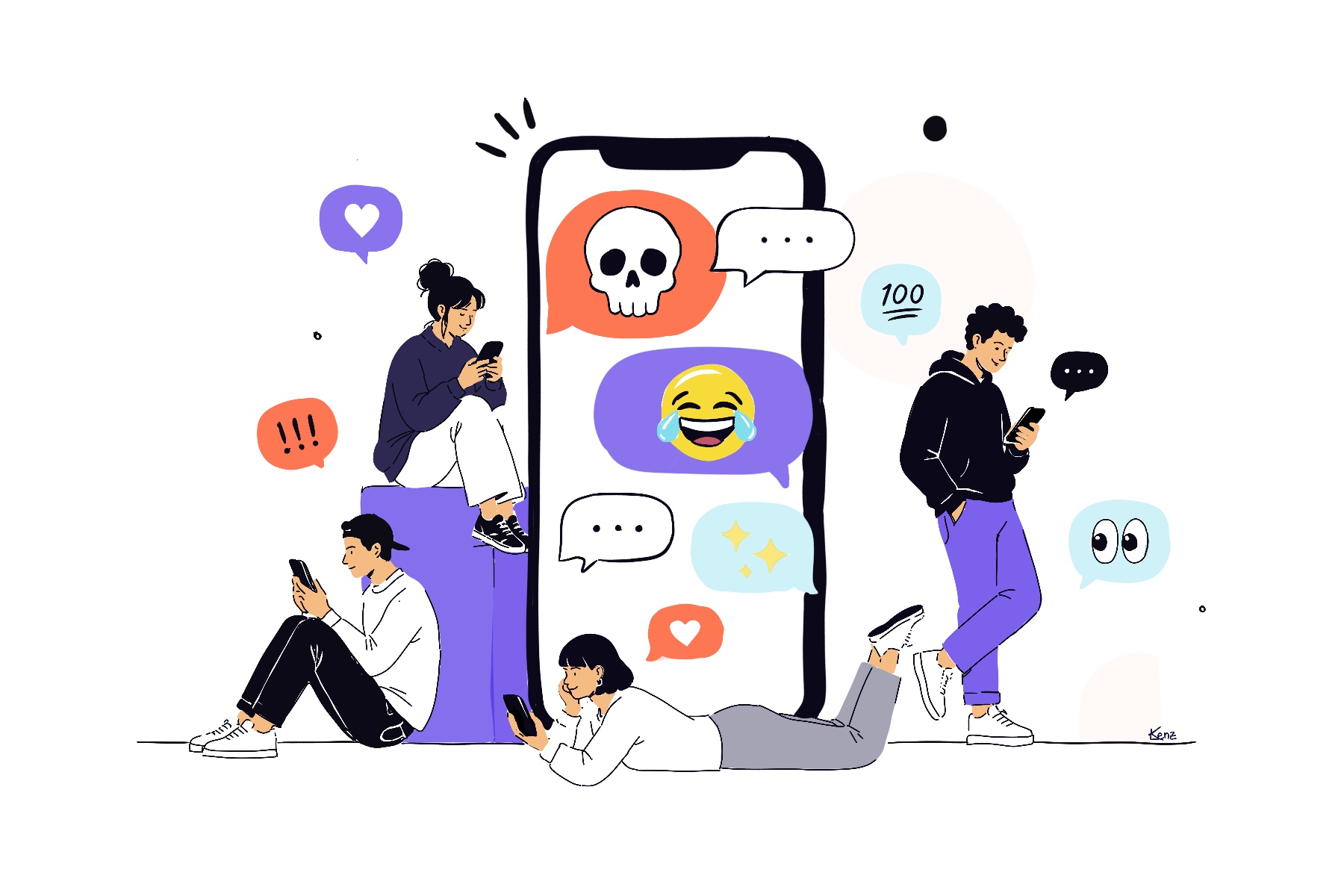
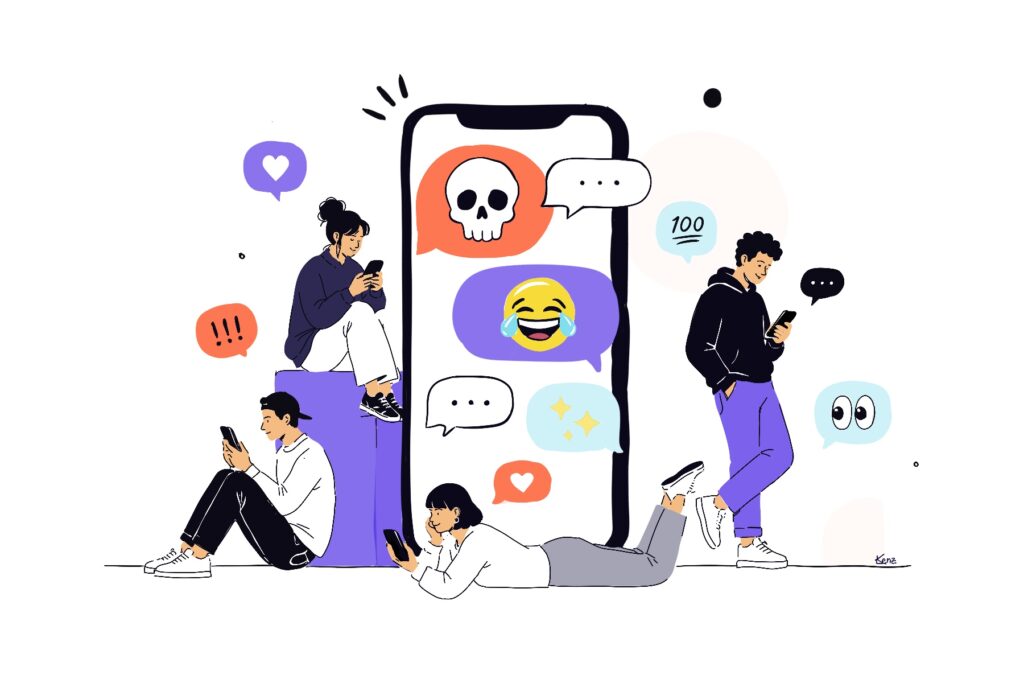
Anyone scrolling through TikTok comments, Instagram Reels, or family chats these days will see them everywhere: ❤️ 👀 ✨ 💀 Most of us use emojis every day, often without even thinking about it. A heart after a message, a pair of eyes under a post, a skull in response to a particularly good joke. These symbols have become so commonplace that we hardly even think about them anymore. Yet they often reveal more about a message than the actual words do.
A 👀 can express curiosity, agreement, or a silent “I saw that.” A 💀 no longer stands for danger, but often means “I can’t stop laughing.” And a ✨ at the end of a sentence can sometimes completely change the tone. Emojis have been part of our digital communication for years. Some fade back into the background, while others take on a life of their own and suddenly pop up everywhere. This is exactly what shows how people work together to evolve language.
So, on World Emoji Day on July 17, it’s worth taking a closer look at the little symbols on our keyboards. Emojis have long been more than just digital decorations. They help convey tone and attitude. Often, they even tell part of the actual story.
When an Emoji Conveys the Actual Message
Written language has one drawback: it lacks tone of voice, facial expressions, and body language. Anyone who has ever misunderstood a message knows the problem. Is this serious? Ironic? Enthusiastic? Annoyed? This is exactly where emojis come in. They provide the context that’s missing between the lines. Often, a single symbol is enough to give a statement a completely different meaning.
A ❤️ has a different effect than a 👍. A 👀 creates suspense. A ✨ can express enthusiasm or add a touch of humor to a statement. That’s why emojis are no longer just about emotions. They help convey the intended meaning.
How Emojis Take on New Meanings
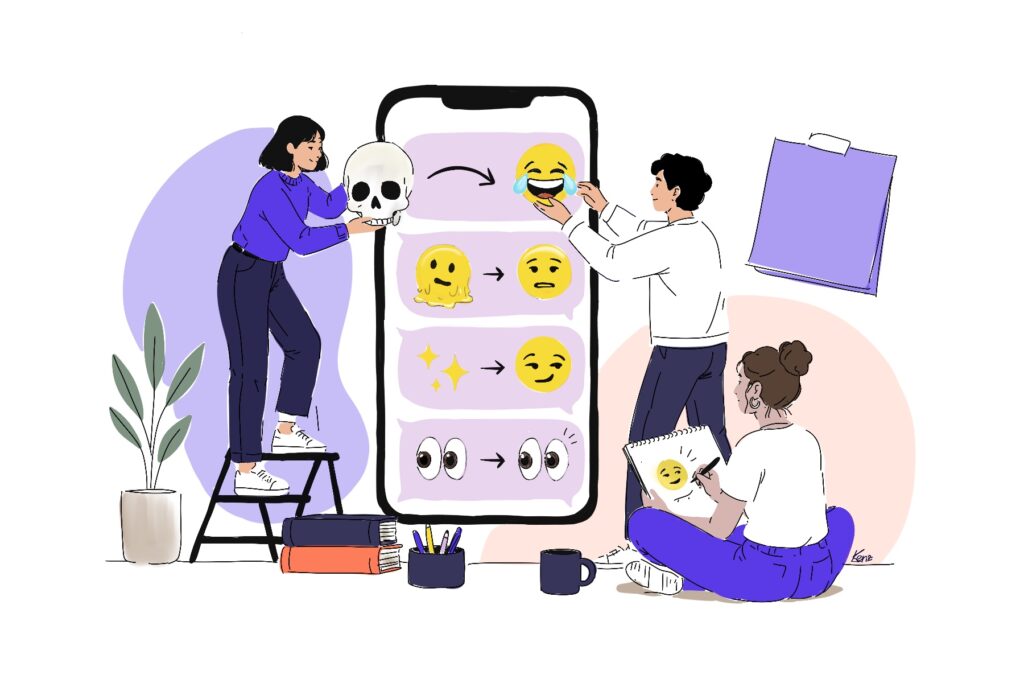
This is particularly evident in cases where emojis have taken on new meanings over time. The skull emoji 💀 is probably one of the symbols with the most surprising evolution on the internet. It’s actually supposed to represent death or danger. In many comment sections today, it means, “This is so funny, I can’t take it anymore.” The same is true of the melting face 🫠. On social media, it often signifies feeling overwhelmed, vicarious embarrassment, or moments when you’d rather sink into the ground. These days, when someone puts a ✨ after a sentence, they often mean something completely different from glitter. The emoji can signal irony, reinforce a statement, or give it a certain undertone.
None of these meanings has been officially established. They have become accepted because people have adopted them, continued to use them, and understood them. Language has always evolved in this way. This change can be observed particularly clearly in the digital space.
Just how naturally emojis convey meaning today was recently demonstrated by a social media trend in which brands contrasted the communication styles of Millennials and Gen Z. While one group described products in several sentences, the other often needed only a picture, three emojis, and a short comment. The posts were deliberately exaggerated. At the same time, they highlighted just how much digital communication now relies on a shared context. Those who know the codes immediately understand what’s meant. Those who don’t sometimes wonder why a skull suddenly stands for laughter. Perhaps this also explains why emojis work so naturally today. They are small cultural shortcuts. They don’t replace stories. However, they help us grasp tone, mood, and meaning more quickly.
Why This Is Also Interesting for Brands
Every community develops its own codes, inside jokes, and habits. This applies to words just as much as it does to emojis. People who regularly use TikTok or Instagram often interpret the same symbols differently than those who are primarily active on LinkedIn. What seems obvious within one community can be understood completely differently outside of it. That’s exactly why using emojis isn’t about trying to seem as modern as possible. What matters most is whether you understand the language of your target audience. To be honest, asking which emoji is the “right” one is often the wrong question. It’s much more interesting to ask why people use certain symbols and what meanings they associate with them.
The fact that digital communication today is increasingly shaped by community, context, and authenticity is evident not only in emojis. Platforms like TikTok have also changed expectations regarding language and communication. We’ve already discussed this in our article “Employer Branding on TikTok: Why Glossy Image Is Losing Ground and Authenticity Is Gaining Ground”.
“The most interesting emojis are often the ones that people imbue with new meanings. That’s exactly where you can see how language emerges on the internet.”
Katrin Lenz, PR & Brand Storytelling Consultant at Mashup Communications
Conclusion
Good communication isn’t just about the words we choose. Sometimes a single symbol reveals more about the tone and attitude of a message than an entire paragraph. Perhaps that is precisely the true message of World Emoji Day. The focus isn’t on the symbols themselves. The real story begins when people give them meaning.
Mini FAQ: Emojis
What do emojis actually mean?
Emojis convey much more than just emotions. They help convey tone, attitude, and context, and can significantly change the meaning of a message.
Why Do Emojis Change Their Meanings?
New meanings are not officially defined; rather, they emerge through usage. The more often people use an emoji in a particular context, the more firmly that meaning becomes established in everyday life.
Why don’t all people interpret emojis the same way?
The meanings of many emojis emerge within specific communities and platforms. People who regularly use TikTok or Instagram often interpret certain symbols differently than those who primarily use them in messaging apps or on LinkedIn.
Should brands use emojis in their communications?
Yes, as long as they’re appropriate for the target audience and the specific channel. What matters isn’t the number of emojis, but whether their meaning is understood in the given context.

Mit einem Studium in Literatur-, Kunst- und Medienwissenschaft sowie Kultur- und Medienmanagement verbindet Katrin Lenz künstlerische Perspektiven mit strategischer Kommunikation.
Share this article