
Effective Communication When Delivering Bad News: How Clarity and Empathy Build Trust

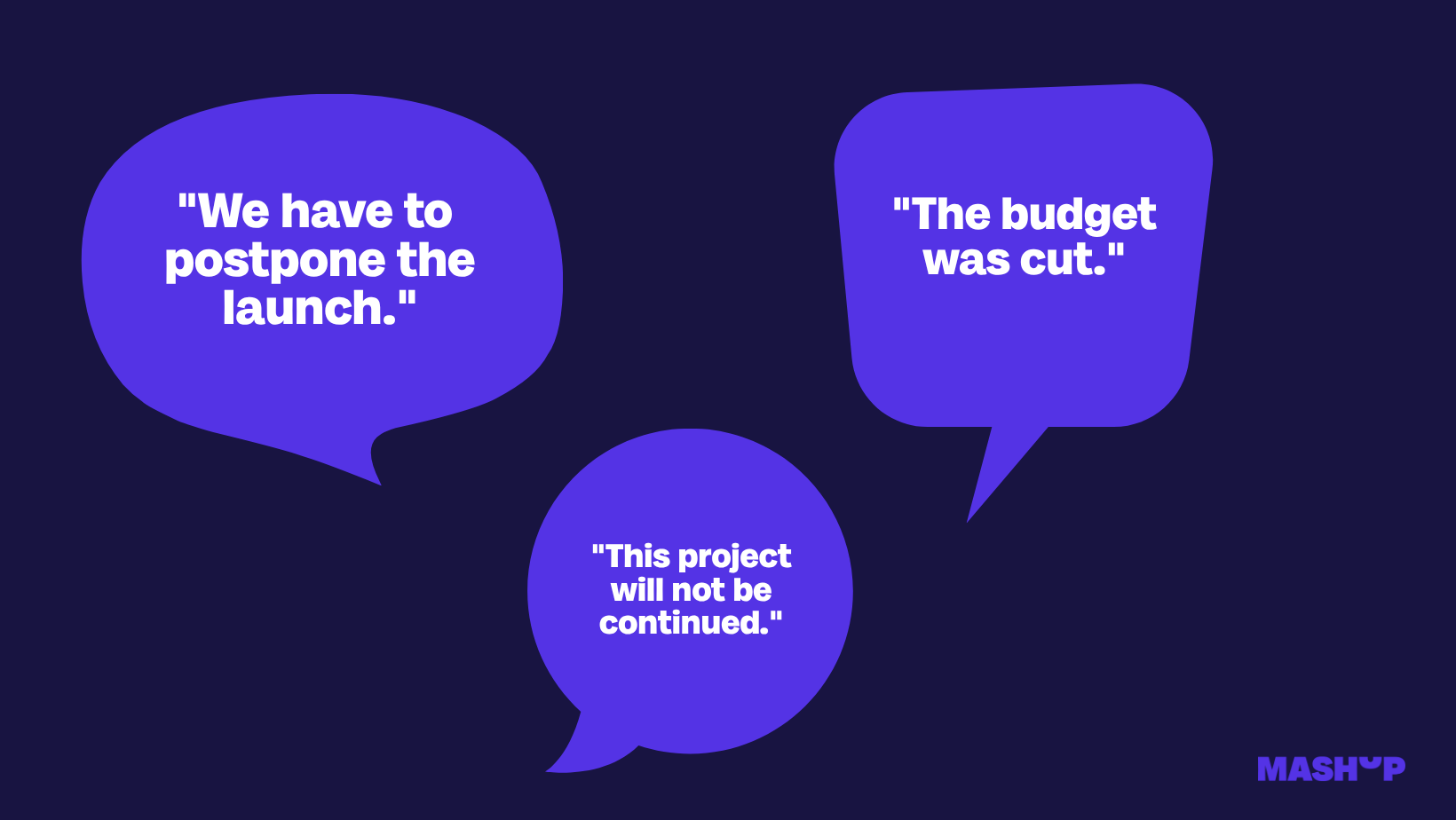
Messages like these—or similar ones—are part of the daily work routine for many executives, product managers, and project leaders. Nevertheless, they are among the most challenging communication situations of all. That’s because bad news often triggers disappointment, uncertainty, or resistance. It is precisely in these moments that the way you communicate determines whether trust is maintained or lost.
The good news is that you can prepare for difficult conversations. With a clear structure and the right methods, you can convey even unpleasant messages in a respectful, transparent, and solution-oriented way.
The Five Basic Principles of Good Communication
Regardless of the situation, there are five principles that should underlie any difficult communication.
1. Empathy and clarity go hand in hand 💜 🔮
Many managers tend to sugarcoat bad news. They choose their words carefully, put things into perspective, or beat around the bush. The result: Listeners sense that something is wrong, but they don’t know exactly what.
Equally problematic is the opposite: communication that is factual but devoid of emotion.
The best communication combines both:
- The message is clearly stated.
- At the same time, we recognize the impact it has on others.
Example:
“I know how much heart and soul you’ve put into the corporate podcast. That’s why this decision isn’t an easy one for me. Nevertheless, we have to put the release of the next episodes on hold for now.”
2. Transparency builds acceptance 🪧 ✅
People accept decisions more readily when they can understand why they were made. This isn’t about justifying yourself or revealing every detail. What matters is explaining the key background information in a way that is easy to understand.
Instead of:
“The marketing department made that decision.”
Better:
“After analyzing the streaming figures, it became clear that we are not reaching the relevant audience with our current topics.”
3. Provide guidance 🧭
After receiving bad news, almost everyone asks themselves the same question:
“What does this mean for me?”
That’s why it’s not enough to simply announce the decision. Good communication also explains:
- What’s changing?
- What stays the same?
- What are the implications of this decision?
- What happens next?
4. Take responsibility ☔️
Trust is built where responsibility is evident. Anyone who hides behind phrases like
“That decision was made by higher-ups.”
signals distance.
Instead, statements have a greater impact when responsibility is taken:
“We made this decision together as the management team, and I am available to serve as the point of contact for the next steps.”
5. Highlight opportunities 🗺️
Even when the news is bad, people need guidance. That’s why every difficult conversation should end with a clear outlook:
- What are the next steps?
- When will there be new information?
- Who is responsible for which tasks?
Uncertainty often arises not from the news itself, but from a lack of perspective.
“Trust isn’t built through good news, but through good communication.”
Nora Feist, communications expert and managing director of Mashup Communications
The B.A.L.A.N.C.E. Model: Communicating Difficult News in a Structured Way
The B.A.L.A.N.C.E. model is a helpful tool for communicating negative news. It helps you convey difficult messages clearly, understandably, and empathetically.
B – Botschaft (Message)
🧠 The actual news comes first. No long introductions, no beating around the bush.
“We won’t be releasing the podcast as planned.”
A – Acceptance
💡 Show understanding for the other person’s situation.
“I know that many of you have been working toward the launch date.”
L – Logic
💡 Explain clearly why this decision was made.
“While editing the video, we noticed some quality issues with the audio recordings that we need to fix before the release.”
A – Alternatives
🔎 What options are available now?
“We can reduce the number of episodes or reschedule the date.”
N – Next Steps
🔎 What exactly happens?
“We’ll create a new content plan by Friday.”
C – Commitment
🔎 Who takes responsibility?
“I’ll let our advertising partners know and keep you updated regularly on our progress.”
E – Empathy
💡 Leave room for questions and feedback.
Difficult communication doesn’t end with the message; often, that’s where it really begins.
The S.B.I. Model: Feedback Without Blame
Not every difficult conversation involves decisions or project changes. Often, it’s also about giving feedback to employees or colleagues.
This is where the so-called S.B.I. model comes in handy. It ensures that feedback remains specific and does not become personal.
S – Situation
What’s this about?
💬 Describe the specific situation. When and where did what happen?
“At the strategy meeting on Tuesday …”
⛳️ This limits the feedback and makes it clear that you’re not offering “general criticism.”
B – Behavior
Describe the behavior in specific terms
👀 Describe only observable behavior.
Not:
“You’re unreliable.”
But:
“You didn’t send the presentation until ten minutes before the meeting.”
⛳️ Describe only observable behavior; no interpretations, no personality labels.
I – Impact
Why is this important?
🧶 Explain the effect. Make it clear why the behavior is relevant.
“That made it impossible for us to plan the agenda effectively.”
⛳️ The conversation focuses exclusively on observable behavior and its effects, not on personality traits or assumptions.
How the two models work together
Although the two models have different focuses, they complement each other perfectly.
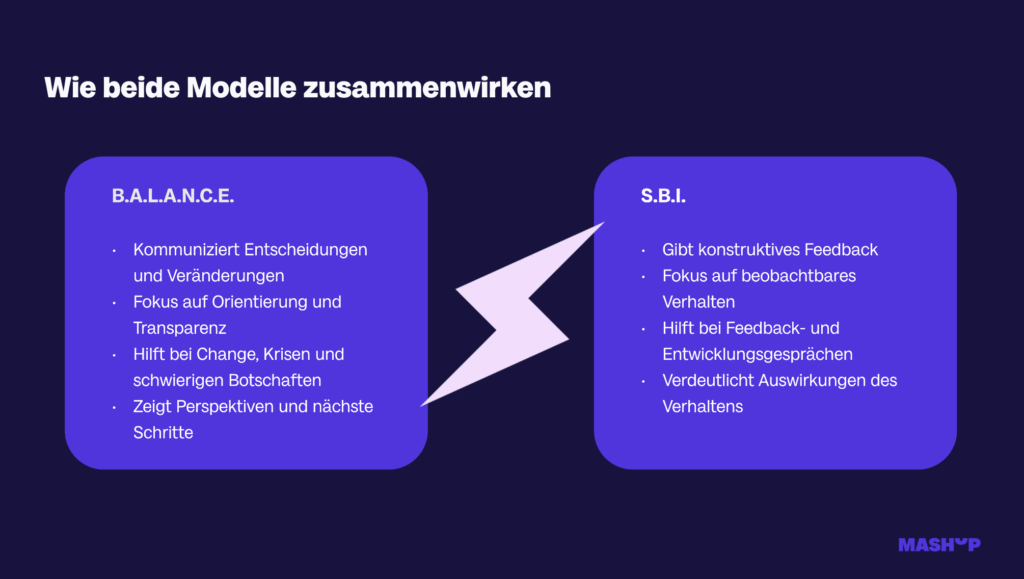
An example from day-to-day agency work:
A PR consultant must first inform the client that a press release will be postponed. To do so, she uses the B.A.L.A.N.C.E. model.
In the subsequent conversation with the team member responsible, she wants to find out why the text was prepared late. The S.B.I. model is a useful tool for this.
This creates a form of communication that both provides guidance and facilitates individualized learning.
Key Takeaways: “Effective Communication for Bad News”
💬 Bad news can’t be avoided, but poor communication can. However, conveying difficult messages with empathy, clarity, and structure builds trust even in challenging situations.
⚖️ The B.A.L.A.N.C.E. model helps ensure that decisions are communicated in a transparent and solution-oriented manner.
🪑 The S.B.I. model helps you formulate feedback in a factual and development-oriented manner.
🛠️ Together, these two models form a practical toolkit for modern leadership, project work, and consulting. After all, good communication isn’t about how we announce successes, but about how we handle difficult messages.
More articles on crisis communication

Nora Feist ist Storytelling-Enthusiastin, PR-Expertin und gemeinsam mit Miriam Schwellnus Geschäftsführerin von Mashup Communications. Seit 2010 begleitet sie Unternehmen dabei, ihre Geschichten zu entdecken und zu erzählen. In Workshops, Webinaren und Online-Kursen gibt sie gern ihr Wissen rund um Storytelling und Employer Branding weiter.
Share this article
Related articles
27 August 2026
Effective Communication When Delivering Bad News: How Clarity and Empathy Build Trust
Read More
8 July 2026
AI and Entering the Workforce: Is a Lost Generation Emerging in the Job Market?
Read More

28 October 2025